
FreeCell vs Solitaire: A Complete Comparison
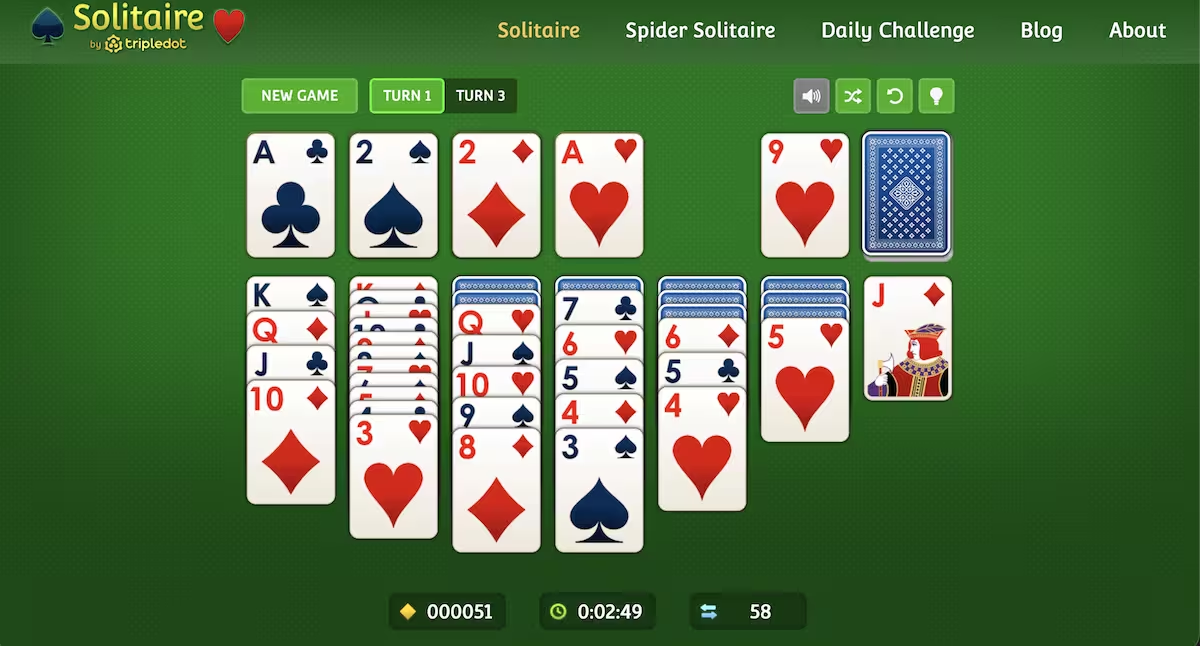
FreeCell and Solitaire are two of the most popular solo card games in the world. While both belong to the Solitaire family, they offer very different experiences in terms of strategy, difficulty, and play style. For casual players, especially those aged 45 and older, knowing which version to play can make a big difference in how much you enjoy the game.
This comparison will help you understand the major differences between FreeCell and classic Solitaire (also known as Klondike). It will also help you decide which one suits your preferences, whether you enjoy logic and planning or something more traditional and relaxed.
You can try both FreeCell and Klondike Solitaire for free at Solitaire.com, with no download or signup required.
What Is FreeCell?
FreeCell is a logic-based solitaire game where all 52 cards are dealt face-up at the beginning. The objective is to move all cards to the Foundation piles, organized by suit from Ace to King.
The layout includes:
- 8 Tableau columns where the main action takes place
- 4 Free Cells used for temporary storage
- 4 Foundation piles that build up by suit
Because every card is visible from the start, FreeCell is considered highly strategic. There's little to no luck involved. Instead, players must plan moves in advance and think several steps ahead to win.
Nearly every standard FreeCell deal is winnable. This makes it ideal for players who enjoy solving logical puzzles and improving over time.
What Is Classic Solitaire (Klondike)?
Klondike is what most people think of when they hear "Solitaire." It's the traditional version of the game that was included in early Windows computers and has become a staple for casual card players around the world.
The layout includes:
- 7 Tableau columns, some cards face down
- A Stockpile, which lets you draw new cards (Turn 1 or Turn 3)
- A Waste pile, where drawn cards are held
- 4 Foundation piles, built by suit
Classic Solitaire is more influenced by luck than FreeCell. Because many cards start face down and only a portion of the deck is accessible at a time, players can't always plan several moves ahead. This creates suspense, but it also means not every game is winnable.
Turn 1 lets you draw one card at a time from the stockpile, making the game more manageable. Turn 3 draws three cards at a time, which increases difficulty and often results in lower win rates.
Many people love Klondike for its familiar rhythm and simple layout. It's fast to play and relaxing, even when the outcome isn't always in your control.
You can play Klondike Solitaire here on Solitaire.com for free.
Win Rates Compared
One of the biggest differences between FreeCell and Klondike is how often you can expect to win.
FreeCell has one of the highest win rates among Solitaire variants. Nearly 99.999% of deals are solvable if played perfectly. This means that when you lose, it's almost always because of a strategic mistake, not bad luck.
Classic Solitaire has a much lower win rate, typically around 35-40% depending on skill level and whether you're playing Turn 1 or Turn 3. Turn 1 (drawing one card at a time) gives you better odds than Turn 3 (drawing three cards).
This difference in win rates shapes the entire playing experience. FreeCell feels more like solving a puzzle, while Klondike feels more like a game of chance and timing.
Strategy Differences: Skill vs Luck
FreeCell Strategy Tips
Success in FreeCell comes from planning and careful resource management. Here's how you can improve your odds:
- Use free cells wisely: each acts like a temporary shelf. Don't fill them too early, or you'll limit your flexibility.
- Prioritize empty columns: These are powerful tools. In FreeCell, an empty column acts like a "super cell" that can help move multiple cards.
- Plan long sequences: You can move more cards together if you have free cells and empty columns. For example, 2 free cells and 1 empty column let you move up to 6 cards in a sequence.
- Build evenly: Don't stack too heavily in one area. Spread out your moves to reveal more options.
FreeCell rewards players who think ahead. It's especially satisfying when you solve a deal through careful sequencing and deliberate play.
Klondike Strategy Tips
Klondike strategy focuses more on card reveal and smart timing:
- Reveal face-down cards quickly: Each hidden card you uncover gives you more chances to build.
- Use the stockpile carefully: Especially in Turn 3, make mental notes of where needed cards are in the draw cycle.
- Save empty columns for Kings: Only Kings can go in empty tableau spots, so don't clear a column unless you have a King ready.
- Foundation isn't always first: It can be tempting to move cards to the Foundation pile immediately, but sometimes it's better to keep them in the Tableau to support longer sequences.
The key in Klondike is flexibility. Since you can't see everything, you often need to make the best choice with partial information.
Which Game Should You Play?
The best version of Solitaire depends on your personal preference and play style. Here's a quick decision guide:
Play FreeCell if you:
- Enjoy solving puzzles with visible information
- Prefer games that reward logic over luck
- Dislike getting stuck with unwinnable deals
- Want a game that helps sharpen memory and focus
- Are patient and like planning 3-4 moves ahead
Play Classic Solitaire if you:
- Want traditional Solitaire gameplay
- Prefer faster, more casual games
- Enjoy the suspense of hidden cards and random draws
- Don't mind that not all games are winnable
- Want to replay a nostalgic favorite from earlier computers
Real Examples in Action
FreeCell Example:
Suppose you have a 7♣, 6♦, 5♠, and 4♥ stacked in descending order. If you have two free cells and one empty column, you can move the full sequence together to another column to uncover a face-down card or create space.
Classic Solitaire Example:
You draw a 10♦ from the stockpile. You can place it on a Jack♣ already in your Tableau, which opens space to move a 9♠ from another column. That move reveals a hidden card and helps free a path to the Foundation.
FreeCell: A Brain Game Favorite
FreeCell is especially appealing to players looking to keep their minds sharp. Because every move is based on logic and visibility, it supports pattern recognition, planning, working memory, and sequencing.
Many players enjoy FreeCell daily as a type of brain exercise. The consistent solvability and full control make it feel like a mental workout, with the reward of progress you can see.
Klondike: A Comforting Classic
Klondike continues to be the most widely played version of Solitaire for a reason. Its simple setup, relaxing pace, and nostalgic feel make it ideal for casual play, especially for older adults who remember the original Windows game.
Not every deal will be winnable, but that's part of the charm. The element of chance adds a bit of drama to each game.
Related Variants Worth Exploring
If you're curious about other types of Solitaire, these are also available on Solitaire.com:
- Spider Solitaire: Great for experienced players. Multiple suits add difficulty.
- Forty Thieves: A challenging variant with two decks and stricter move rules.
- TriPeaks and Golf Solitaire: Good for casual, quick play with unique layouts.
Final Thoughts
Both FreeCell and Classic Solitaire have stood the test of time. They're each rewarding in their own way. FreeCell gives you control and strategy. Klondike offers familiarity and surprise. The best part? You don't have to choose just one.
Try them both free at Solitaire.com and see which style fits you best.
Whether you're playing for focus, fun, or nostalgia, Solitaire.com offers classic card games designed for every kind of player - no download, no signup, and always free.
FAQs
What's the difference between Solitaire and FreeCell?
FreeCell shows all cards face-up and uses four free cells for storage. Solitaire (Klondike) has hidden cards, a stockpile, and is more influenced by luck and draw order.
Is FreeCell harder than Solitaire?
FreeCell requires more planning, but most games are winnable. Solitaire is simpler to learn but harder to win due to randomness and hidden cards.
Can every FreeCell game be won?
Almost. Over 99.999% of standard FreeCell deals are solvable if played correctly, making it one of the most winnable Solitaire variants.
Which game is better for brain training?
FreeCell is better for brain training. It encourages long-term planning, working memory, and logic, while minimizing chance-based frustration.
What is the best strategy for FreeCell?
Keep free cells empty when possible, use empty columns wisely, and plan several moves ahead to free blocked sequences or reach low-ranking cards.
Is Solitaire more relaxing than FreeCell?
Many players find Solitaire more relaxing due to its simple flow and familiar format. It's great for casual play without requiring deep strategy.
Should beginners start with Klondike or FreeCell?
Beginners usually start with Klondike for its simplicity. Once comfortable, FreeCell offers a more strategic and consistent challenge.
What's the win rate difference between FreeCell and Klondike?
FreeCell has a win rate close to 99%. Klondike averages 35-40%, depending on skill and whether you're playing Turn 1 or Turn 3. This FreeCell vs Klondike comparison shows how different the two games really are.