
Odds of Winning Solitaire: The Complete Data
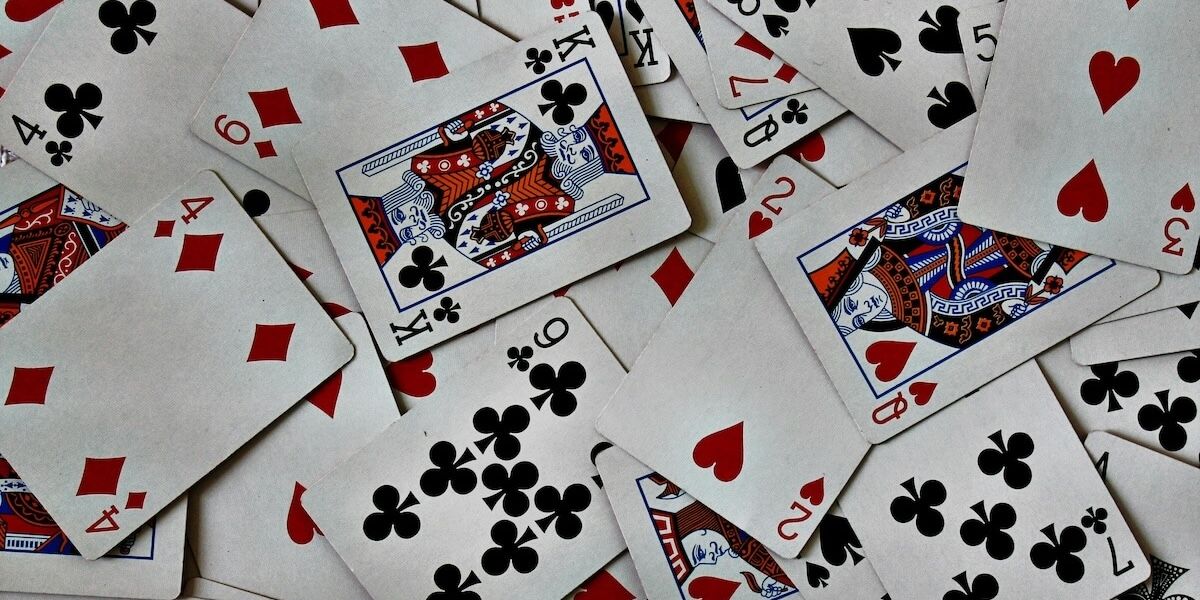
The odds of winning Solitaire depend on the variant you play, the deal you receive, and the decisions you make. Not every game of Solitaire is winnable!
Klondike Solitaire has a theoretical winnability of about 82%. However, in practice, most players win only 11-33% of their games. FreeCell offers the best odds, with 99% of deals being solvable. Spider Solitaire and Pyramid sit at the other end, with win rates that even experienced players find challenging.
This guide breaks down the solitaire win rate for every major variant. It also explains the gap between theoretical winnability and actual results, and how to improve your chances with a practical strategy.
Can You Win Every Game of Solitaire?
No, you cannot win every game of Solitaire. Some deals are impossible to solve, no matter how well you play.
In Klondike Solitaire, about 18% of deals have no winning path. That means roughly 1 in 5 games cannot be won. The face-down cards in the Tableau (the seven card columns) and the order of the stock pile (the draw deck) may block every possible sequence.
FreeCell comes closest to being always winnable. Out of over 1 million analyzed deals, only one is confirmed unwinnable: Deal #11,982. That gives FreeCell a theoretical winnability of 99.999%.
Other variants have much lower odds. Pyramid Solitaire is winnable in only about 5% of deals. The layout limits your choices, and most starting positions leave no path to clearing the board.
The variant you choose matters more than skill when it comes to raw winnability.
Theoretical Winnability vs Actual Win Rate: Why the Numbers Differ
Theoretical winnability measures the number of deals that can be solved with perfect play. Actual win rate reflects how often real players finish a game successfully. These two numbers are very different.
Theoretical winnability assumes you can see every card, including face-down cards and the stock pile order. It also assumes you make the best possible move at every step. Researchers use a method called Monte Carlo simulation to test this. They run thousands of random deals and check which ones have at least one winning path.
Actual win rates are much lower. Real players cannot see face-down cards in the Tableau or the order of the stock pile. You make decisions with limited information. Even strong players miss optimal moves.
For example, Klondike Solitaire has a theoretical winnability of about 82%. The actual win rate for Turn 1 (drawing one card at a time) is around 33%. For Turn 3 (drawing three cards), it drops to roughly 11%.
This gap is what makes Solitaire such a compelling game. Most deals can be won, but finding the path takes skill and patience.
Win Rates for Every Solitaire Variant
Each type of solitaire game has its own win rate. A clear pattern emerges from this data. Games with more visible information, like FreeCell, have higher win rates. Games with more hidden cards and restricted moves, like Pyramid, have the lowest.
Klondike Solitaire Win Rate: A Closer Look
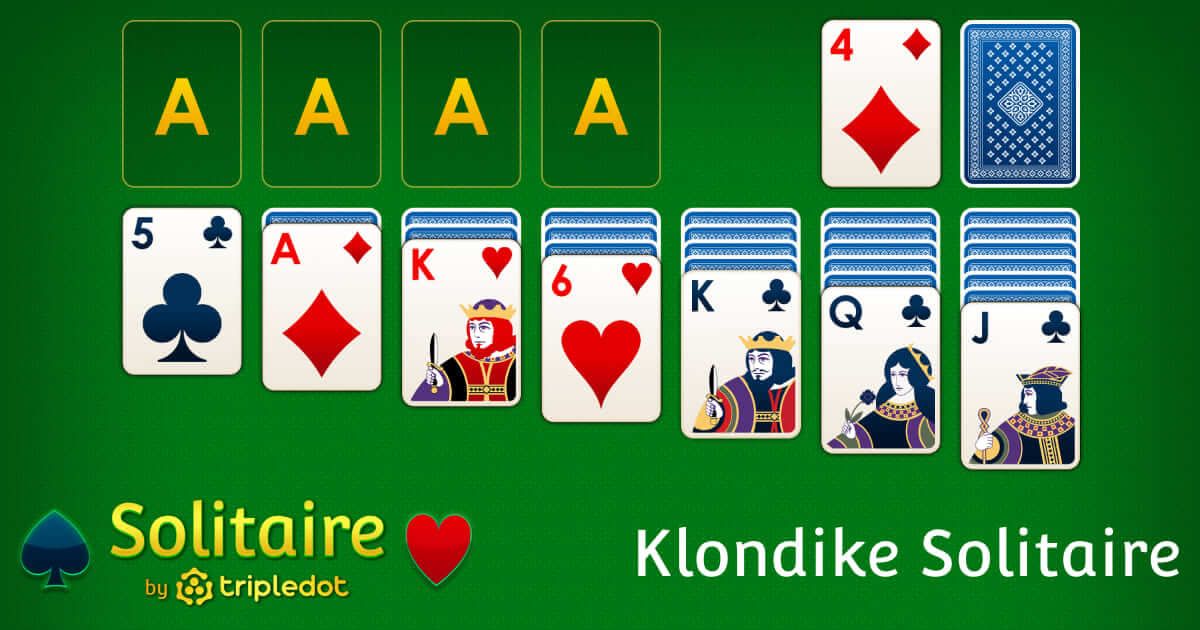
Klondike is the most recognized version of Solitaire and the most searched when players ask about winning odds.
The Klondike solitaire win rate depends on whether you play Turn 1 or Turn 3. In Turn 1, you draw one card at a time from the stock pile. In Turn 3, you draw three cards but can only play the top one.
Turn 1 Win Rate
About 82% of Turn 1 deals are theoretically winnable. In practice, most players win around 40% of their games. That means roughly 1 in 3 games ends in a win.
Turn 1 gives you more access to stock pile cards. You see every card in order, which creates more opportunities for useful moves.
Turn 3 Win Rate
Turn 3 shares the same 82% theoretical winnability. However, the actual win rate drops to about 11%. That is roughly 1 in 9 games.
The drop happens because Turn 3 cycles through the stock pile in groups of three. You can only play the top card from each group. This buries useful cards deeper in the deck, limiting your options.
If you want to improve, start with Turn 1. It gives you a clearer view of the stock pile and more room to plan.
FreeCell Solitaire Win Rate
FreeCell Solitaire has the highest winnability of any popular variant. About 99% of all FreeCell deals can be solved.
The reason is straightforward. All 52 cards are face-up from the start. There are no hidden cards and no Stock pile. This removes luck almost entirely and puts strategy in full control.
The actual win rate ranges from 40% to 80%, depending on skill. Beginners win around 40% of games. Experienced players who plan several moves can reach 75-80%.
Only one deal in the original collection of 32,000 FreeCell deals is confirmed unwinnable: Deal #11,982. Researchers have tested it from every angle, and there is no solution.
FreeCell is a strong choice if you want to build solitaire strategies and see consistent results from your decisions.
Spider Solitaire Win Rate
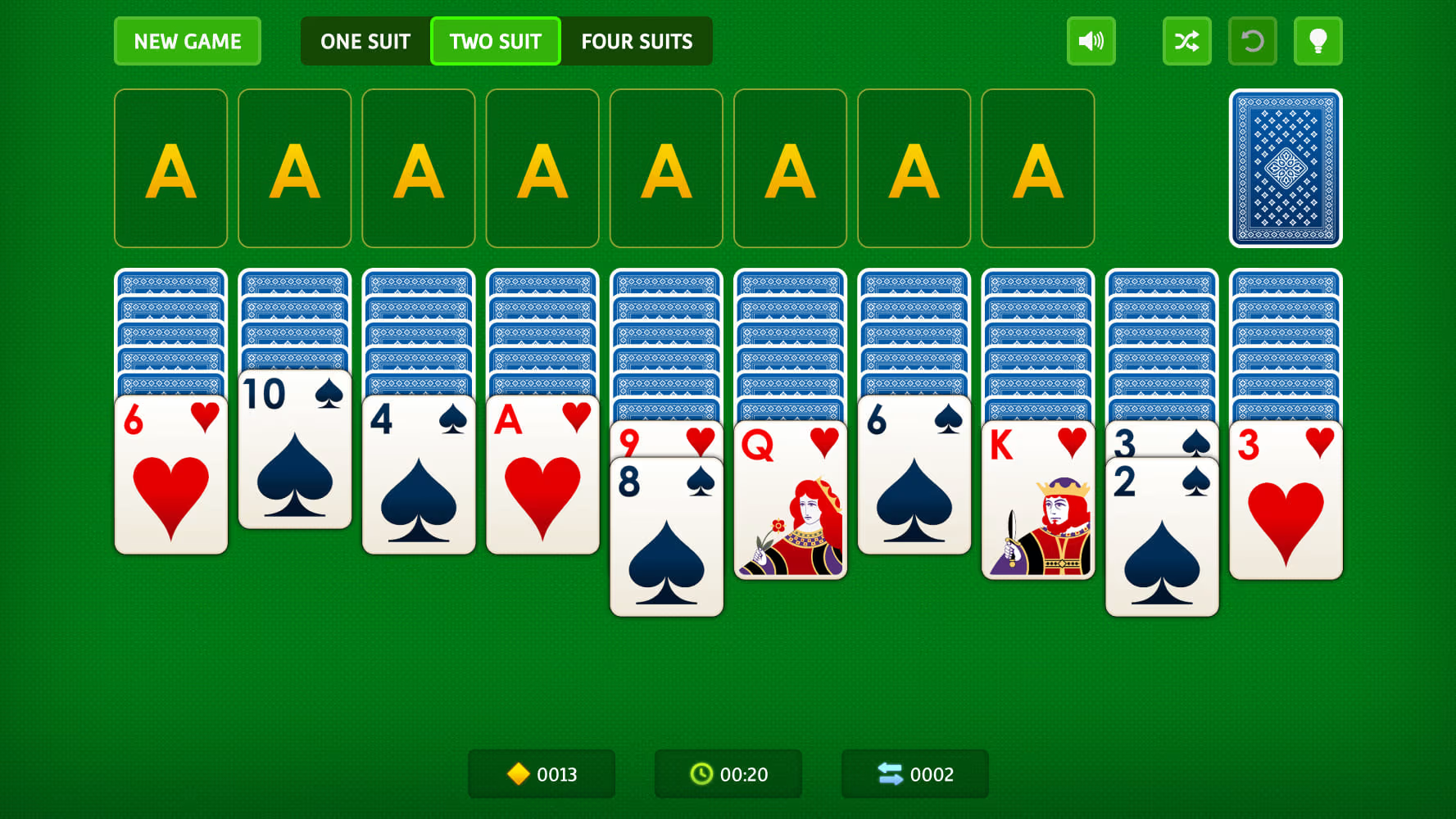
Spider Solitaire uses two full decks (104 cards) and offers three difficulty levels based on the number of suits in play.
1-Suit Spider
Uses only Spades. Theoretical winnability is around 80%. Actual win rates range from 60-80%. This is the most beginner-friendly version.
2-Suit Spider
Uses Spades and Hearts. Winnability drops to about 35-50%. Actual win rates fall to 20-35%. You must match suits to complete sequences, which adds complexity.
4-Suit Spider
Uses all four suits. Theoretical winnability is roughly 35%. Actual win rates fall below 10%. This is one of the most difficult solitaire variants and rewards long-term planning.
The number of suits directly controls difficulty. More suits mean more restrictions on which cards you can group and move together.
Pyramid Solitaire Win Rate
Pyramid Solitaire has the lowest win rate among popular variants. Only about 5% of deals are winnable. The actual win rate sits at 1-2%.
The game requires you to pair cards that add up to 13. For example, a 6♥ pairs with a 7♠. Kings are removed alone because they equal 13 by themselves.
The pyramid-shaped Tableau is the biggest challenge. Many cards are trapped beneath others. If the pairs you need are stacked in the wrong order, the deal becomes impossible.
Pyramid is best enjoyed as a quick, luck-driven puzzle. Wins are rare, which makes each one all the more satisfying.
###TriPeaks Solitaire Win Rate
TriPeaks Solitaire sits at the opposite end of the difficulty scale. Around 90% of deals are winnable with good play.
The game uses a three-peaked layout. You remove cards that are one rank higher or lower than the current card in the Waste pile (the discard area). The goal is to clear all three peaks.
TriPeaks rewards quick pattern recognition. Runs of consecutive removals score bonus points and clear the board faster.
This variant is popular among casual players who want a relaxing game with steady progress.
How to Improve Your Solitaire Win Rate
Strategy has a measurable effect on your results. In FreeCell, beginners win about 40% of games. Players who learn core strategies reach 75-80%. That is close to doubling your success rate.
These practical tips apply across most Solitaire variants.
Reveal Face-Down Cards First
In Klondike and Spider, your priority is uncovering face-down cards in the Tableau. Each revealed card opens new moves. For example, moving a 9♠ to a 10♥ might uncover an Ace hidden beneath it.
Keep Empty Tableau Columns Available
An empty column gives you temporary storage for rearranging sequences. In Klondike, only Kings can fill empty columns, so choose your King carefully. A King with a Queen and Jack ready to build on it is worth more than one that sits alone.
Don't Rush Cards to the Foundation
Moving a 3♦ to the Foundation (the four piles built by suit from Ace to King) feels productive. However, that 3♦ might be more useful in the Tableau for building longer card sequences. Move cards up only when they are no longer needed below.
Use the Undo Button to Test Different Paths
On Solitaire.com, the Unlimited Undo button lets you experiment freely. Try one sequence of moves. If it leads to a dead end, undo and try another approach. This is one of the fastest ways to learn which moves work.
Try the Hint Button When Stuck
The Hint system highlights a legal move you may have missed. It is especially helpful when you are still learning to spot patterns across the Tableau.
Play Shorter Columns First
Columns with fewer face-down cards are faster to clear. Clearing a short column early gives you a space to work with, which opens up the rest of the board.
These habits build over time. Regular practice sharpens pattern recognition, and your win rate will reflect that progress. Try the Daily Challenge on Solitaire.com for consistent, structured practice.
What Are the Odds of Winning Solitaire Multiple Times in a Row?
Winning back-to-back Solitaire games is harder than it sounds. The probability drops sharply with each consecutive win.
Using Klondike Turn 1's actual win rate of 33%, the math works like this:
- 1 game: 33% (1 in 3 games)
- 2 in a row: 10.9% (1 in 9 games)
- 3 in a row: 3.6% (1 in 28 games)
- 5 in a row: 0.39% (1 in 254 games)
- 10 in a row: 0.0015% (1 in ~65,500 games)
For Klondike Turn 3, with an 11% win rate, the numbers are even steeper. Winning 5 in a row at those odds would require roughly 62,000 attempts.
If you play FreeCell at an 80% win rate, winning 5 in a row has about a 33% chance. That is why skilled FreeCell players can build long winning streaks.
These figures assume each game is independent. Your skill stays constant, and each deal is random.
Does Solitaire Come Down to Luck or Skill?
Every Solitaire game involves both luck and skill. The balance shifts depending on the variant.
Klondike leans toward luck. Hidden cards and the stock pile order create uncertainty. Even strong decisions cannot overcome an unwinnable deal.
FreeCell leans toward skill. All cards are visible from the start. The outcome depends almost entirely on your planning and execution.
Spider falls in between. Face-down cards add a bit of luck, but the game offers enough flexibility for skilled players to overcome tough layouts.
Pyramid relies heavily on luck. The fixed layout and specific pairing requirements leave little room for strategy.
The common thread across all variants: skill always improves your win rate. Learning proven solitaire strategies helps you find winning paths in deals that seem impossible at first.
Frequently Asked Questions
Is every game of Solitaire winnable?
No. In Klondike, about 82% of deals are theoretically winnable. The remaining 18% have no solution, regardless of how you play. FreeCell comes closest to 100%, with only one confirmed unwinnable deal out of 32,000.
What is the hardest Solitaire game to win?
Pyramid Solitaire has the lowest win rate at 1-2%. Spider Solitaire with 4 suits is the hardest among games that offer meaningful strategic depth, with actual win rates below 10%.
Why is Turn 3 Klondike harder than Turn 1?
In Turn 3 Klondike, you draw three cards from the stock pile at once, but can only play the top card. This hides two out of every three cards, reducing the actual win rate from 33% to 11%.
Can I improve my Solitaire win rate?
Yes. Learning core strategies can significantly improve your results. In FreeCell, skilled players win up to 80% of the time, compared to 40% for beginners. Practice with the Hint and Undo tools on Solitaire.com to build these habits.
What are the odds of winning 5 Solitaire games in a row?
It depends on the variant. In Klondike Turn 1 (33% win rate), winning 5 straight has about a 0.39% chance. That works out to roughly 1 in 254 attempts. In FreeCell, at an 80% win rate, the odds jump to about 33%.
Is Solitaire a game of luck or skill?
Both. The deal is random (luck), but your choices shape the outcome (skill). Variants like FreeCell emphasize skill, while Pyramid depends more on luck. Playing regularly and learning effective strategies will improve your results across every version.