
Free Daily Brain Games to Keep Your Mind Sharp

A daily brain game is one of the simplest habits you can build into your day. Five to ten quiet minutes with a puzzle can give your mind a small workout. The routine is easy to keep up.
This guide covers free daily brain games you can play online, from Wordle and Sudoku to Connections and the daily Solitaire challenge. Several are available for free in your browser, with no downloads, making it easy to get started right away.
Why Play a Brain Game Every Day?
Daily brain games give your mind a steady, low-pressure workout. Each game asks you to think, focus, and make small decisions in a short window. Beyond that, many players enjoy the calm routine of solving one puzzle each day.
A daily game does not need a class, a long session, or a complicated setup. It just needs a few quiet minutes. That makes daily puzzle games easier to turn into a habit you can return to every morning, afternoon, or evening.
The best brain games to play daily are simple to start and satisfying to repeat. Word games build vocabulary and pattern spotting. Logic puzzles reward careful thinking. Card games add planning, patience, and a familiar rhythm.
Word Games to Play Daily: Wordle and Alternatives
Word games have become one of the most popular daily-puzzle habits. They are short, easy to share, and simple to fit into a coffee break.
Wordle gives you six tries to guess a five-letter word. One puzzle appears each day, which keeps the habit short. That single-puzzle format is part of why so many people come back to it.
Other word games like Wordle use a similar daily format. Quordle gives you four boards to solve at once. Spelling Bee asks you to make words from seven letters. Letter Boxed turns the puzzle into a small box of connected letters.
These daily games like Wordle work well because they have a clear finish. You solve one puzzle, compare notes if you like, and move on with your day.
Daily Card Games for Your Brain (Solitaire Daily Challenge)
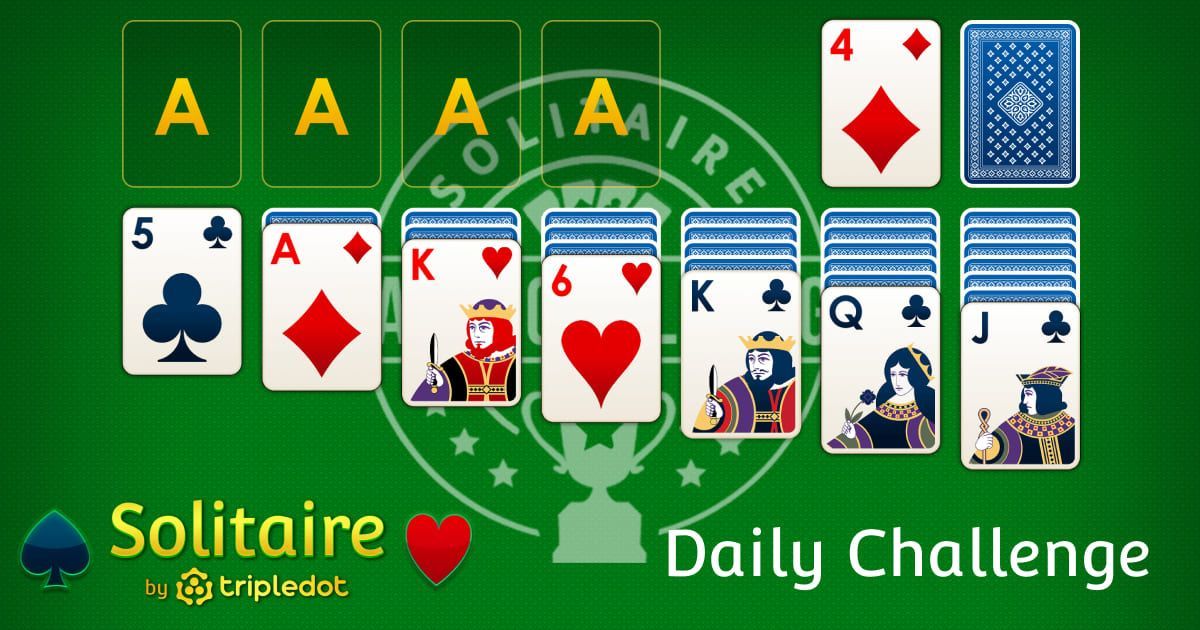
Card games are the original daily brain workout. People played them long before computers, and they still hold up today. A familiar card game can also feel warmer than a new app, which makes the habit easier to keep.
The daily Solitaire challenge on Solitaire.com gives you one fresh puzzle each day. It has the same daily-habit appeal as Wordle and Connections, but in card form. You can play it on a phone, tablet, or computer in your browser.
Classic Solitaire also rewards regular play because each deal asks for fresh planning. You build foundation piles by suit, from Ace to King, while uncovering face-down cards in the tableau. The simple rhythm of moving cards can make the game feel calm and focused.
To learn more about how card games may support a calm and sharp mind, read our guide to the brain benefits of solitaire.
Logic and Number Puzzles: Sudoku and Friends
Logic puzzles are the quieter side of the daily brain game world. They reward steady thinking instead of quick guesses.
Sudoku is the classic choice. You fill a nine-by-nine grid with numbers from one through nine. Each row, column, and small box must contain each number once.
Games like Sudoku offer the same slow, careful feeling. Kakuro mixes number placement with simple addition. KenKen adds arithmetic to a grid. Hashi asks you to connect numbered islands with bridges.
These puzzles share one helpful quality. They wait as long as you need them to. That makes them a good choice when you want a thoughtful daily game without pressure.
Pattern and Association Games: Connections and Similar
Pattern games ask your mind to spot the link between things. They are quick, satisfying, and easy to discuss with friends or family.
Connections is a daily word-grouping game. You sort 16 words into four groups of four. Each group shares a hidden theme, so the challenge is finding what the words have in common.
Games like Connections include Strands, where you find themed words inside a letter grid. The Mini Crossword gives you a small clue-based puzzle that usually fits into a short break. Geography and trivia games can work the same way when they offer one short daily round.
These daily puzzle games are useful when you want variety. They use memory, pattern spotting, and association skills in a compact format.
How to Build a Daily Brain-Game Routine
A daily brain-game habit is easier to build when you keep it short, simple, and tied to something you already do.
First, pick one game you actually enjoy. The right game is the one you look forward to, not the one that sounds most impressive. Next, connect it to a fixed moment in your day, like morning coffee, lunch, or the evening wind-down.
Keep each session short, around five to ten minutes. A short daily session is easier to maintain than a long session once in a while. It also keeps the game feeling relaxing instead of like another task.
Try mixing two or three games across the week. A word game one day, a logic puzzle the next, and a card game on the third can give you a fuller routine. For more daily-friendly options, see our list of the best solo card games and our guide to brain-boosting card games.
Play Today's Solitaire Challenge for Free
The daily Solitaire challenge is a simple way to start a brain-game habit today. You get one fresh puzzle, ready in seconds, with no download. It also saves your spot if you have to step away, helping it fit a real daily routine.
Solitaire.com adds gentle features that fit daily play. Unlimited undo lets you experiment without restarting. The hint button finds a legal move when you are stuck. Classic scoring keeps the focus on quiet play rather than points or money.
Pair the daily Solitaire challenge with one word game and one logic puzzle, and you have a balanced brain-game routine. Each one takes only a few minutes, so the habit stays easy to keep. Open the daily Solitaire challenge, play one round, and start building a routine you can enjoy every day.