
Spider Solitaire Strategy: How to Win More Games
Spider Solitaire rewards one habit above all others: protecting empty columns. Most lost games end the moment a player deals from the stock pile with an empty column still open. This guide covers Spider Solitaire tips and decisions that raise your win rate, from the first move to the last deal.
How to win at Spider Solitaire changes with the suit count, so each level gets its own section with a worked example. If you need the rules first, start with our guide on how to play Spider Solitaire, then come back here.
Why Spider Solitaire Is Hard to Win
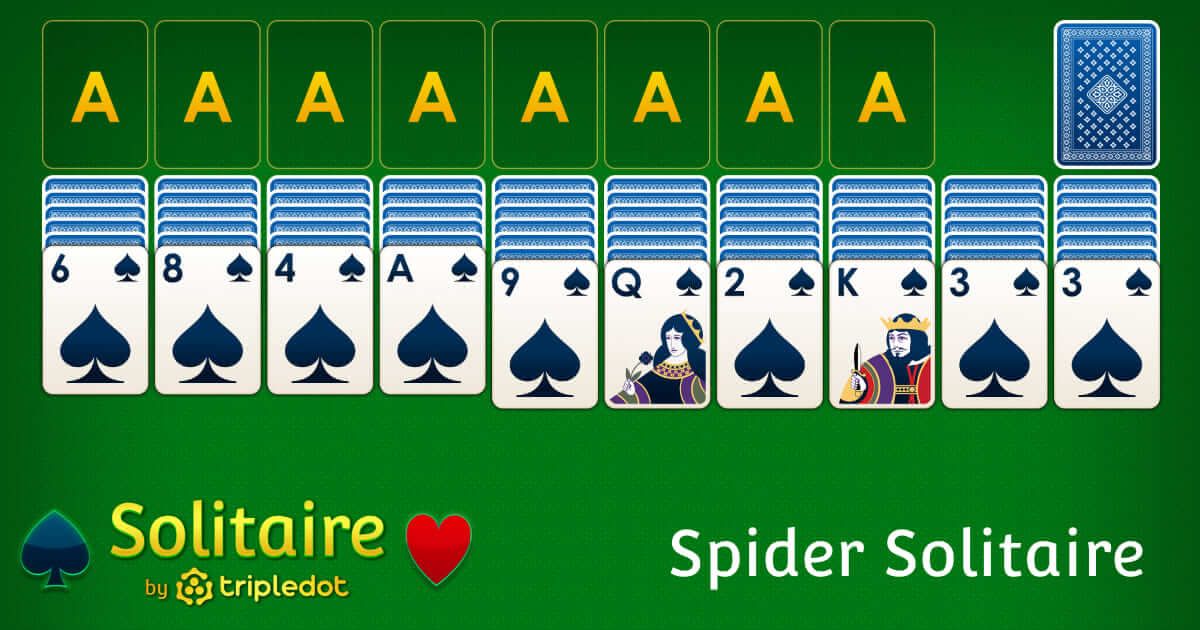
Spider Solitaire is hard because you must build eight complete same-suit runs, each a sequence from King down to Ace. The game uses 104 cards across ten tableau columns, which are the ten stacks of cards on the table. The game starts with only 54 cards dealt, and only the top card of each column is face-up.
The other 50 cards sit in the stock pile, the face-down reserve waiting to be dealt. Each deal drops ten of them, one on every column. That deal rule is the trap. Each deal covers every column with a new card, including any run you were building.
The win rate shows the cost. The 1-suit game sits around 80 percent, and the 2-suit game drops to about 35 percent. The 4-suit game falls below 10 percent. For the full numbers, see our breakdown of the odds of winning solitaire.
Empty Columns Are Your Most Valuable Resource
An empty column is the only space in Spider where any card can go. Every other move must follow rank order. That makes an empty column a workbench. You use it to pull a buried card out, move a run across, or break up a mixed-suit stack.
Treat empty columns the way a chess player treats a queen. Spend them only when the move gains something you cannot get any other way. Clearing a face-down card is worth it. Parking a card you will never move again is not.
When to Deal From the Stock
Deal from the stock pile only when no useful move remains, and every empty column has been put to work. The deal is not free. It drops ten new cards, one per column, and buries every top card you were counting on.
Before each deal, run this short checklist:
- Move every card that can go to a same-suit run.
- Uncover any face-down card you can reach.
- Fill any empty column with something useful.
- Only then deal.
Players who deal early to "see more cards" give away the game one deal at a time.
1-Suit Strategy: Play Fast and Clear Columns
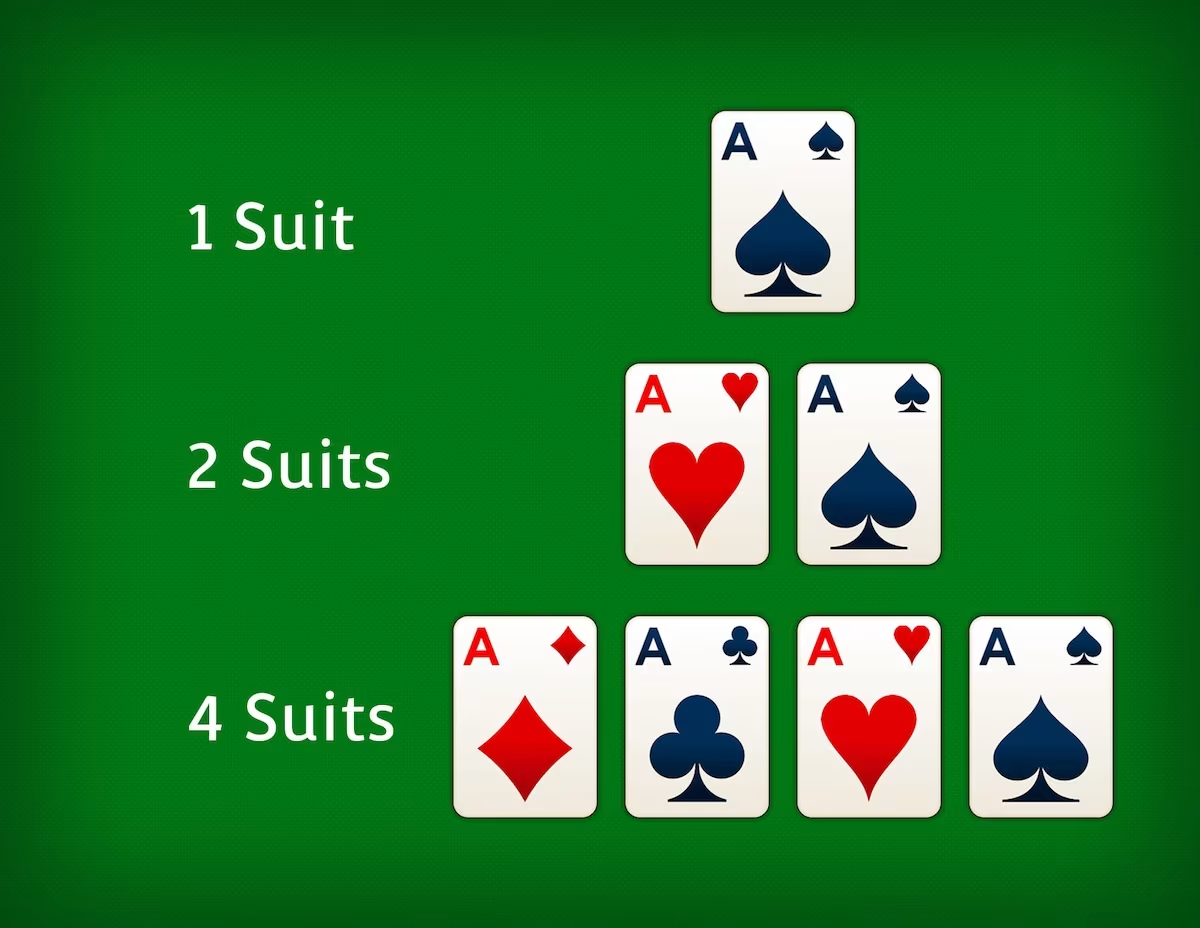
In the 1-suit game, every card is a Spade, so every move keeps a run intact. Your only job is to clear columns quickly and uncover face-down cards. Speed is fine here because there is no suit to protect.
Here is the one mistake that still loses 1-suit games. Say column 7 is empty and column 3 shows a 5♠. A 6♠ sits on top of column 9 with a face-down card beneath it. Do not deal.
Move the 6♠ to the empty column, play the 5♠ onto it, and flip the card under the 6♠. The deal would have covered that face-down card for the rest of the game. Play the Spider Solitaire 1-suit game to practice this reflex until it is automatic.
2-Suit Strategy: Protect Your Same-Suit Runs
In the 2-suit game, Spades and Hearts share the tableau. You can still place any card on the next-highest card, in any suit. Only a same-suit run can move as a group. A 7♥ placed on an 8♠ freezes that 8♠ in place until the 7♥ leaves.
The strategy is to build in suit whenever possible. Use off-suit moves only to uncover a face-down card.
Here is the worked example. Column 2 shows an 8♠ with a face-down card under it. Column 5 shows a 9♥, and column 8 shows a 9♠.
The weak move is 8♠ onto 9♥, which mixes suits. The strong move is 8♠ onto 9♠. That flips the face-down card, keeps the run in suit, and saves any empty column for later. Try it in Spider Solitaire 2 Suits.
4-Suit Strategy: Slow Down and Plan Around Empty Columns
In the 4-suit game, every off-suit move costs you later, so each move needs a reason. Even careful players win less than 10 percent of the time. Expect to lose most games, and treat every win as earned.
The core 4-suit rule is this: fill an empty column with a King that is covering face-down cards. A King can only move into an empty column, so it blocks everything under it until one opens. Moving the King into an empty column turns a dead column into a live one.
Here is the example. Column 4 is empty. Column 6 has a K♦ on top with three face-down cards under it.
Move the K♦ into column 4, then build down on it. That flips the first face-down card and starts opening the column. Build this habit in Spider Solitaire 4 Suits.
Common Mistakes That Lose Winnable Games
Most winnable Spider games are lost to the same five habits. Each one is easy to avoid once you can name it:
- Dealing from the stock pile with an empty column still open
- Placing a short off-suit card into an empty column and leaving it there
- Building a long mixed-suit run that looks tidy but cannot move as a unit
- Ignoring the face-down count and playing only the cards you can see
- Chasing one complete run while the rest of the board locks up around it
Is Every Spider Solitaire Game Winnable?
Is Spider Solitaire always winnable? No. Some deals are unwinnable, and the odds get worse as you add suits. Players win the 1-suit game about 80 percent of the time, and they win fewer than 10 percent of 4-suit games.
That is why unlimited undo matters. On Solitaire.com, you can back up any number of moves and try a different line. A game that looks lost after a bad deal is often still winnable from three moves earlier.
Even experts do not win every game. Losing a hard deal is not a sign of weak play.
Play Spider Solitaire Free Online
All three Spider Solitaire difficulty levels are free at Solitaire.com, with no downloads and no sign-up. Start with 1-suit to build the empty-column habit. Move to 2-suit once you win most games. Save 4-suit for when you want a real test.
Unlimited undo lets you test a line and back out. The hint button finds a legal move when you are stuck. It will not plan your empty columns for you. Classic scoring tracks your progress with no Vegas-style wagering.
If you are deciding between Spider and the classic game, see our guide to Classic vs Spider Solitaire.