
Turn 1 vs Turn 3 Solitaire: What Actually Changes

Turn 1 and Turn 3 are the two ways to play Klondike Solitaire. Turn 1 is easier. Turn 3 is harder. The only rule that changes between them is how many cards you flip from the stock pile at a time. That single rule shifts the win rate from about 33 percent to about 11 percent. It also changes your scoring, your strategy, and which cards you can even reach on a given pass. This guide walks through every real difference. You can then pick the right mode for how you want to play today.
Rule Differences at a Glance
The table below breaks down the Solitaire Turn 3rules that differ from Turn 1. Everything not listed is identical to standard Klondike, so the rest of the rules stay the same.
|Rule|Turn 1|Turn 3|
|---|---|---|
|Cards flipped per draw|1|3|
|Cards playable per flip|1|1 (top of group)|
|Stock access|Every card reachable|Only every third card
on a pass|
|Difficulty|Easier|Harder|
|Typical win rate|~33%|~11%|
|Average game time|10–15 min|12–18 min|
|Best for|New and casual
players|Experienced players|
Foundation building, alternating colors, King-only empty columns, and the goal itself are unchanged.
What Turn 1 and Turn 3 Mean in Klondike Solitaire
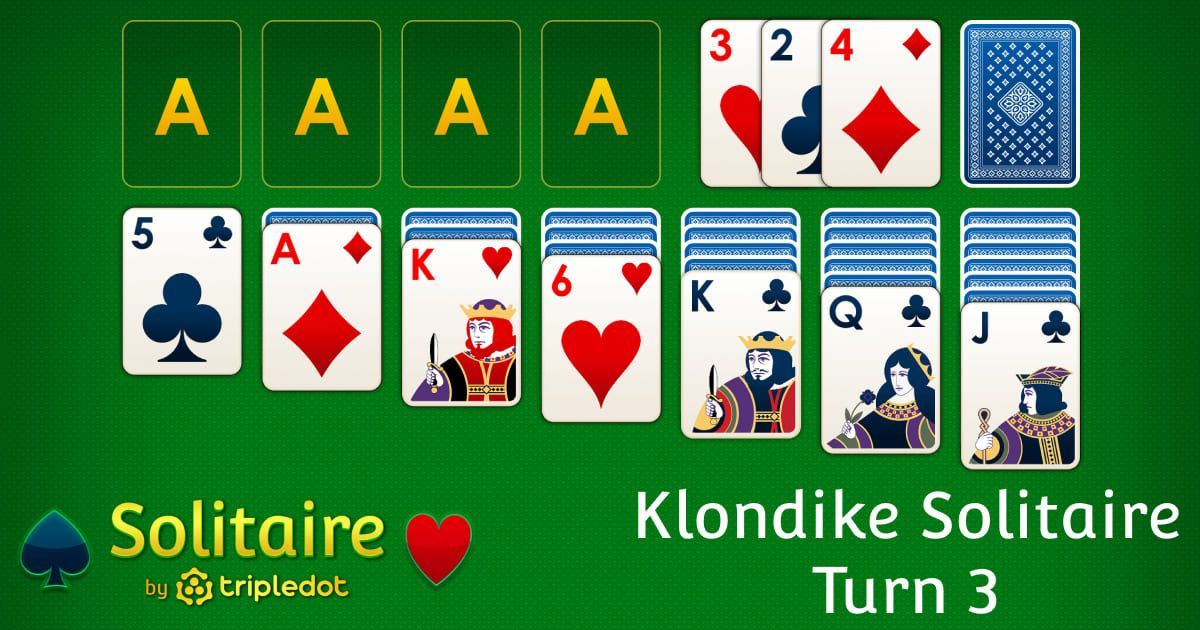
Turn 1 and Turn 3 describe the stock pile rule in Klondike Solitaire. In Turn 1, you flip one card from the stock pile at a time. In Turn 3, you flip three cards at once, and only the top card of that group is playable. This mode also goes by solitaire draw 3 or turn three solitaire.
That is the entire rule change. Everything else about Klondike is the same: you still build four foundation piles from Ace to King by suit, you still stack tableau columns in descending order with alternating colors, and Turn 1 and Turn 3 remain two names for the same game with two different draw rules.
How Drawing Three Cards Changes Which Cards You Can
Reach
The single biggest effect of Turn 3 is card access. Most stock pile cards sit hidden below the top of each group. The stock pile holds 24 cards, so on a single pass, only about a third of them ever reach the top of the waste pile. The rest stay covered until the card above is played.
This changes how you plan. In Turn 1, every stock card is reachable in order. In Turn 3, you must plan around which cards you can touch on this pass. If you need a specific card, you may have to work through several flips to expose it. This is why Turn 3 rewards patience and stock counting.
Win Odds in Turn 1 vs Turn 3 Backed by Data
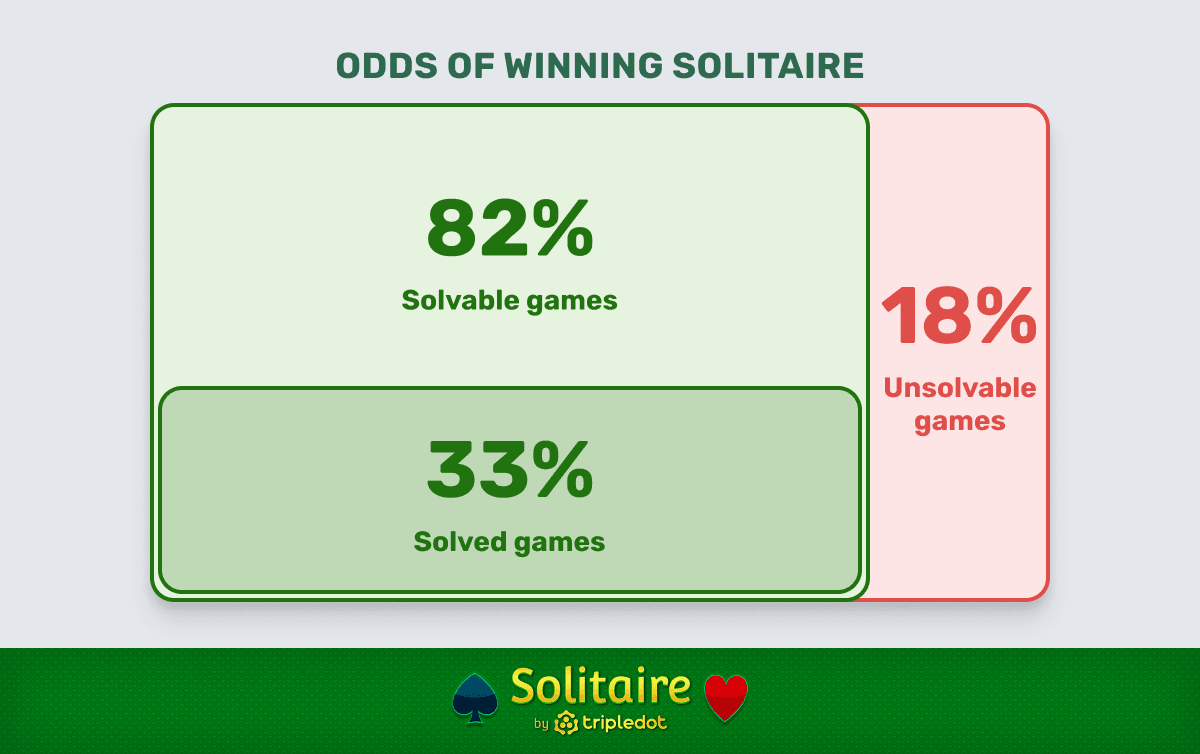
The win rate for Turn 1 Klondike sits around 33 percent with steady play. Turn 3 drops to about 11 percent, a three-times gap for the same layout and the same tableau, based only on the draw rule.
The gap has one main cause. Fewer reachable cards mean fewer chances to find the card you need. Even a strong player will miss useful cards in Turn 3 that Turn 1 would have shown right away. These draw 3 solitaire odds hold up across large sample sizes, not just a handful of games. For a wider look at how Klondike win rates compare to other games, see our full breakdown of the odds of winning solitaire.
Scoring Differences Between the Two Modes
Scoring uses the same classic-scoring formula in both modes on Solitaire.com. Points reward moves to the foundation and revealing face-down cards, while the main scoring difference comes from how often you cycle the stock pile.
In Turn 1, cycling the stock costs you points, so extra passes lower your score. In Turn 3, players naturally cycle more often since not every card is reachable on the first pass. That means Turn 3 games often score lower on the same skill level. Fewer, cleaner passes always beat more, hasty passes.
Strategy Adjustments That Matter in Turn 3
Turn 3 rewards habits that Turn 1 lets you skip. A solid 3-card solitaire strategy starts with five adjustments, ranked from most to least important.
First, count your stock pile. Knowing where each set of three sits tells you which cards will be reachable on the next pass. Second, plan for multiple passes from the start. You will almost always need more than one cycle to win in Turn 3. Third, uncover face-down tableau cards before you draw from the stock. Fourth, hold a useful waste pile card when playing it now hurts a future move. Fifth, avoid opening empty tableau columns unless you have a King ready to fill them.
For the underlying Klondike fundamentals that support these turn-3 moves, see our full guide to Klondike solitaire strategy.
Which Mode Should You Play?
Choosing one card vs three card solitaire comes down to two things: play style and win rate. Turn 1 fits gentler play and higher win rates, while Turn 3 fits harder play and deeper strategy.
Pick Turn 1 if you want a relaxed round, a friendlier win rate, or you are new to Klondike. Pick Turn 3 if you have already won plenty of Turn 1 games and want a harder challenge. Many players use Turn 1 for a quick round and Turn 3 for a longer session. Neither is better; they are two settings on the same game.
Play Turn 1 and Turn 3 Solitaire Free Online
Both modes are free at Solitaire.com, with no downloads, no signup, and no disruptive ads.
Start with Classic Solitaire for Turn 1, or step up to Turn 3 Solitaire when you want the harder challenge. Unlimited Undo lets you test a different order, and the hint button finds a legal move when you are stuck. Both modes use classic scoring.
Learn more about the underlying game in our guide to Klondike Solitaire, then pick your mode and play.